 01
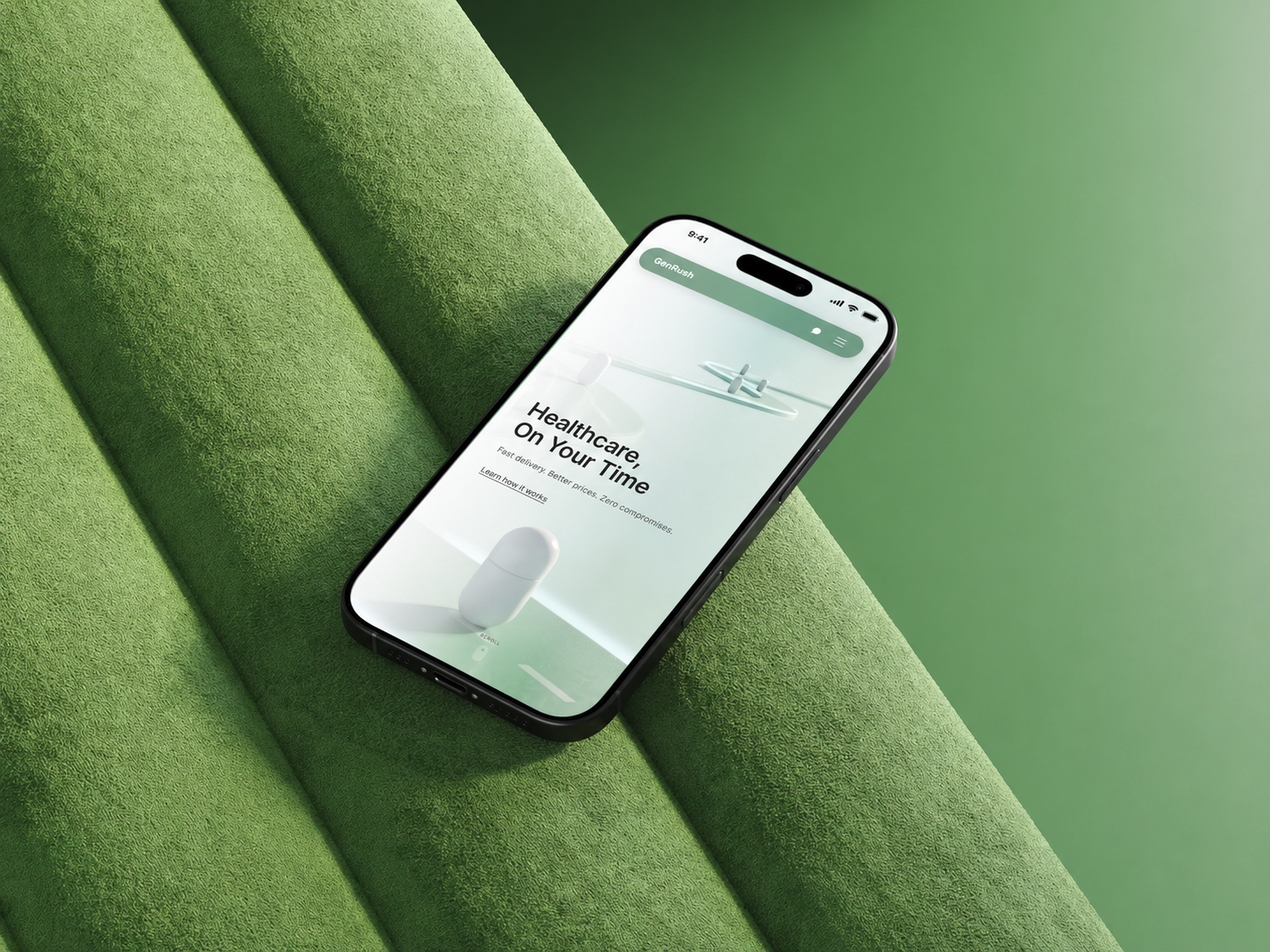
01Healthcare,On Your Time
Genrush is a modern healthcare platform designed to provide fast, affordable, and zero-compromise medical services. We focus on streamlining the patient journey from discovery to consultation, ensuring that quality healthcare is available whenever and wherever it's needed.
Navigating healthcare is often slow and confusing
Healthcare systems are notoriously fragmented. Patients often face long wait times, unclear pricing, and a lack of transparency when seeking medical advice or treatment. This leads to delayed care and a poor user experience.
At Genrush, we identified that onboarding was a major friction point. Users were dropping off before completing their first consultation because the initial setup felt overwhelming and impersonal.
The business needed patients to feel activated before their first appointment. For users, the problem was simpler: the app felt like a clinical tool rather than a wellness companion. How do we get new users to experience the ease of digital healthcare early enough to build trust?
Why we dropped streaks and built a quest instead
The team's first instinct was gamification. Streaks, daily check-ins, Duolingo-style mechanics. The idea: reward users for opening the app every day, build a habit, and conversion would follow.
But the streak model fell apart quickly. It rewards the wrong thing: opening the app is not the same as using it. A user who forgets on day 29 feels punished after 28 days of effort, not motivated. Streaks create anxiety, not engagement. And for Genrush, where the value is in timely medical consultations, daily opens meant nothing.
Instead of engineering habits around app opens, we'd guide users toward meaningful actions, the ones that actually led to activation. The data had already told us what those were.
Three workstreams, one direction
Concept validation
Running unmoderated studies with new users to test quest logic and probing task count vs reward expectations.
Competitive analysis
Reviewing health and habit-building apps to identify patterns that actually work for complex service onboarding.
Cohort data
Mapping current activation flows to baseline the trial-period behaviour before shipping the new features.
Keeping the quest focused
The core tension came from management wanting to include high-friction tasks like "Upload Medical Records" inside the initial quest. While important for long-term value, it was too much to ask from a brand-new user.
We argued for a tiered approach: keep the first quest light and achievable to build trust, then introduce deeper clinical tasks once the user has experienced their first "win" (like finding a nearby doctor). After presenting user test results showing that record uploads caused a 60% drop-off in onboarding, management agreed to move it to a later phase.
Five steps to get new users to their first real win
The core question was: which 5 actions would most reliably take a new user from "interested" to "I get it now"? We landed on a clear sequence that balanced education with immediate utility.
The results spoke for themselves
Guide users early.
Healthcare doesn't have to be daunting. By guiding users through their first few interactions, we built the trust necessary to move them from curiosity to commitment.
Lessons Learned